
Insight
The science behind mental rest: why your brain needs a break
We live in a culture that glorifies productivity. But your brain needs rest to perform. On brain waves, NSDR and mental recovery.
 We live in a culture that glorifies productivity. Always reachable, always busy, always on. Rest feels like a luxury, or worse: like laziness. But science tells a different story. Your brain doesn't just need rest to recover. It needs rest to perform.
The brain has five gears
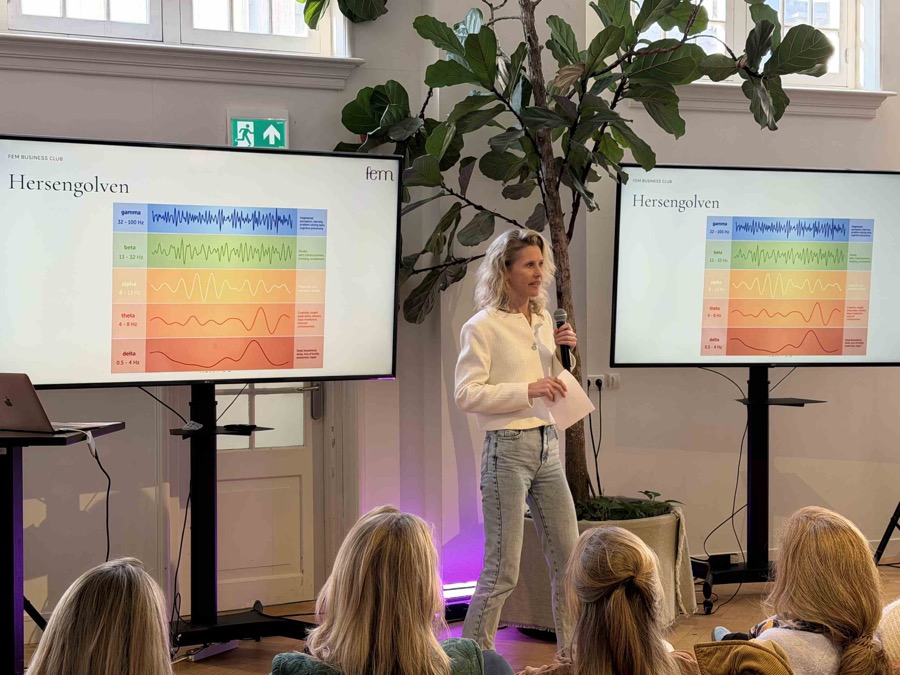
Your brain operates in different wave patterns, each with its own function. Beta waves dominate when you're actively thinking, planning and deciding. This is the mode in which most professionals spend the majority of their day.
But staying chronically in beta comes at a price. Your brain overheats. Concentration decreases, creativity blocks, and your decision-making deteriorates. Not because you're not smart enough, but because your brain is literally exhausted.
Alpha waves emerge during mild relaxation: a walk, daydreaming, standing under the shower. In this state, your brain makes unexpected connections. It's no coincidence that your best ideas often come at moments when you're not actively thinking.
Theta waves appear during deep relaxation and meditation. In this state, your brain has access to creativity, intuition and emotional processing. Delta waves, finally, are the domain of deep sleep, where physical and mental recovery takes place.
Non-Sleep Deep Rest: a new approach
Non-Sleep Deep Rest, or NSDR, is a technique that consciously brings your brain to lower wave patterns without sleeping. It combines elements of yoga nidra, breathwork and guided relaxation.
Research from Stanford University shows that NSDR can increase dopamine production by 65%. Dopamine is the hormone that drives your motivation, focus and learning ability. Additionally, NSDR lowers cortisol, improves sleep quality and strengthens connections between different brain regions.
Why women benefit particularly
Women in leadership positions often carry a double mental load. Besides their professional responsibilities, they often manage the household, family planning, and the emotional needs of those around them. This constant stream of micro-decisions keeps the brain permanently in beta.
The hormonal fluctuations women experience throughout their cycle and life phases amplify this effect. Progesterone, which normally has a calming effect, decreases during perimenopause. The result is that the brain shifts to rest even less naturally.
Rest as a strategic choice
Mental rest is not passivity. It's an active investment in your cognitive capacity. Leaders who consciously build in moments of rest make better decisions, are more creative in problem-solving and have greater emotional resilience.
It starts with a fundamental reappraisal: rest is not a reward after hard work. It's the prerequisite for it.

The Expert
Eva Elias
Wellbeing Expert, International Speaker
Eva is a concept creator, inspirational speaker, wellbeing expert, yoga teacher and creator of the Mind Oasis for Rituals in Amsterdam.
More about Eva

Become a Member
Access to all Masterclasses
This and all other masterclasses are part of the FEM Membership.
All Masterclasses
Exclusive network
Intervision sessions
Buddy programme
Discover more
Other Insights
Explore more articles on personal growth, leadership and health.